

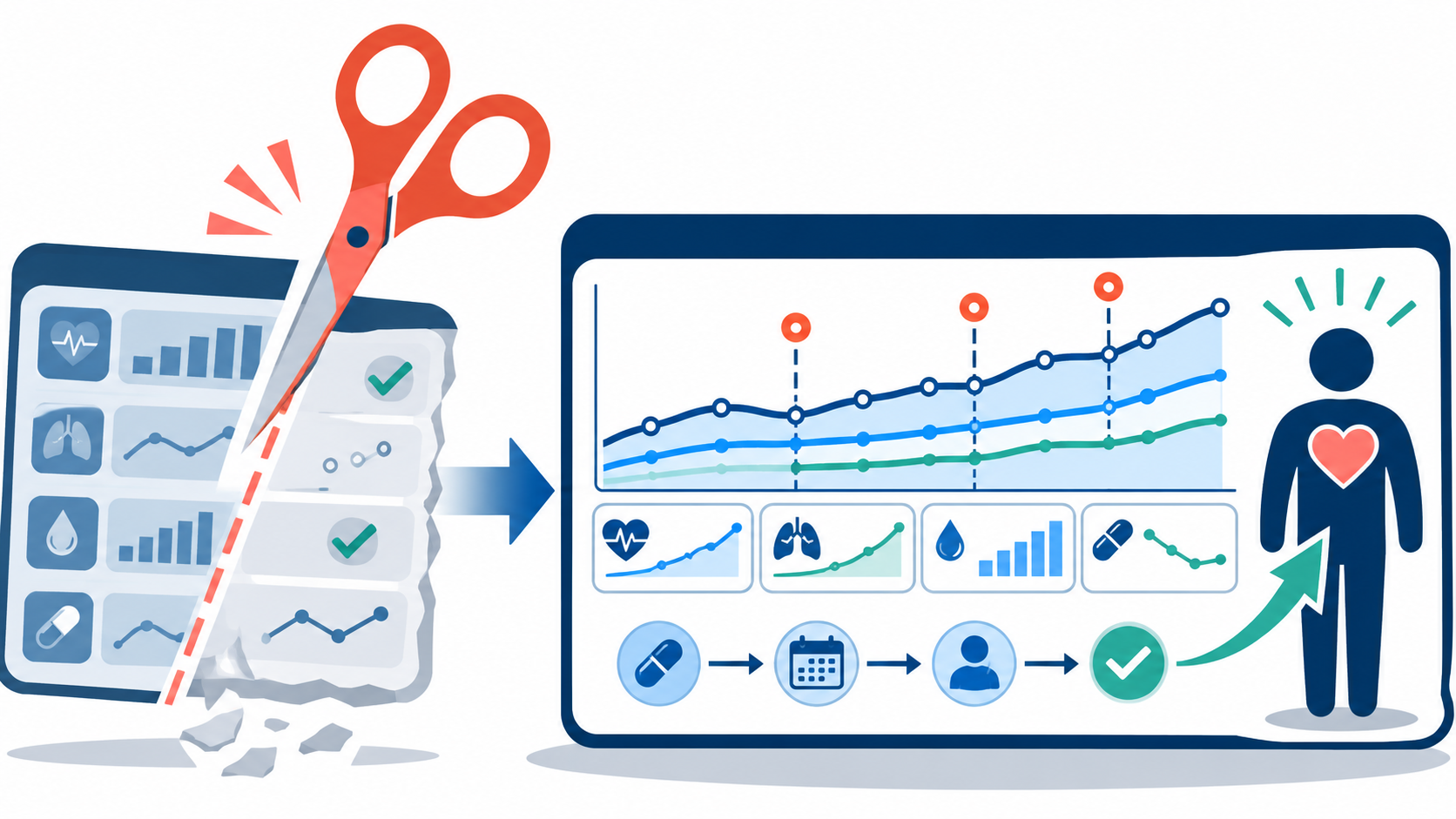
CMS’ proposed changes to MA quality measures miss an opportunity for meaningful reform.
I’ve been reading several comments on LinkedIn about the changes to Part C and Part D Measures in the Medicare Program; Contract Year 2028 Policy and Technical Changes to the Medicare Advantage Program, Medicare Prescription Drug Benefit Program, and Programs of All-Inclusive Care for the Elderly. At the end of this post are tables summarizing the proposed changes.
In brief:
- CMS proposes removing 19 measures from Medicare Stars starting with the 2028 measurement year (2030 Star Rating) leaving a portfolio of 15 measures. Notable are the plans to:
- Eliminate breast and colon cancer screening.
- Remove eye exams and kidney health evaluation for patients with diabetes, depression screening and follow-up, and osteoporosis management.
- The proposed blood pressure measure retains the existing control threshold and numerator. It does not introduce longitudinal blood pressure assessment.
- Of the remaining 15 measures, five are classified as intermediate outcomes, including three Part D medication adherence measures.
Many LinkedIn posts praise the removal of process measures and the reduction in the number of measures. A parsimonious set of high-quality measures certainly has merit. However, the proposed measure set is too limited set in scope to provice a comprehensive assessment of health plan performance upon which to base payment differentials. Too often, incentives reward the ability to identify and rapidly close “gaps” without adequately driving improvements in health outcomes. For example, documenting that the last blood pressure reading of the year is under 140/90 does not mean the blood pressure was adequately controlled during the year. Rapidly addressing open gaps in a fourth-quarter surge is not good care. Medication adherence measures provide useful information but do not establish whether treatment achieved its intended clinical benefit.
Documenting that the last blood pressure reading of the year is under 140/90 does not mean the blood pressure was adequately controlled during the year
The Answer Isn’t Fewer Measures. It’s Better Measurement

Health plans and healthcare organizations respond rationally to financial incentives. When incentives reward closing specific care measurement-generated care gaps, organizations invest in people, processes, and technologies to do so. However, scoring well on the current measurement portfolio does not necessarily translate into better care or better health. Reducing the measurement burden may be necessary, but removing measures without redesigning the measurement strategy will not produce the outcomes we need. For example, process measures can provide valuable insights into care quality when they assess clinically meaningful activities. The challenge is determining which processes warrant measurement and whether they contribute to better outcomes.
The key issue is that we have treated measurement for accountability and measurement for improvement as the same thing. They aren’t.
The key issue is that we have treated measurement for accountability and measurement for improvement as the same thing. They aren’t. We need a more meaningful portfolio that distinguishes measures used for accountability from measures designed to drive improvements in care. We should stop expecting a single measure to serve every purpose.
Many measures used to assess clinicians/ACOs/practices originated in, or were adapted from, measures designed for health plan, payer, and state-level accountability. Accountability measures, particularly those tied to payment, require standardization and reportability. They are largely retrospective. They assess what happened, not what should happen next. Once embedded in accountability programs, they can be difficult to modify or retire. Further, these measures are generally not designed to account for specific populations or individualized needs, or incorporate other factors such as preferences, social needs/risks, and multiple comorbidities.
Improvement requires something different.
Improvement requires something different. Clinicians and their teams need actionable, timely, context-sensitive, patient-specific indicators to drive improvements at the point of care. Traditional HEDIS® measures were primarily designed for population-level performance assessment, not real-time, patient-specific, clinical improvement. Neither were today’s eCQMs. Clinical decision support (CDS) gets closer because it can use patient-specific information to inform decisions at the point of care.

Align Measures to the Needs at Each Level of the Healthcare System
We also need to understand the needs and data assets at each level of the healthcare system. The following image categorizes the levels (in general terms), identifies the predominant data type available (though this is changing as interoperability advances…slowly!), and the main foci of measures applicable at that level.

Measuring What Matters
Here are several examples of more clinically meaningful measurement approaches that could be adapted to other clinical conditions. Some of these measures should only operate at the Clinician/Practice level. Others can serve the Delivery System/ACO/Network. Some may also support accountability and payment. However, each should be designed, tested, and implemented according to a specific purpose.
- Hypertension management: Assess average blood pressure over time rather than relying on a single reading. Measure appropriate treatment intensification when blood pressure remains elevated and de-intensification when treatment causes hypotension.
- Assess therapeutic inertia: How long was the patient’s blood pressure out of control? Did the clinical team/healthcare system/ACO address worsening risk?
- Reward meaningful improvement rather than simply meeting a 140/90 threshold. It is more clinically relevant to reduce a blood pressure of 190/110 to 145/95 than from 145/92 to 139/89.
- Diabetes management: Assess glycemic control over time to better reflect sustained improvements and identify potentially harmful overtreatment. Was medication adjusted when hypoglycemic episodes occurred?
- Chronic Kidney Disease: Appropriately adjust medications as kidney function changes. Assess whether medications were adjusted appropriately according to guidelines. Was a nephrologist consulted in a timely manner to plan for dialysis and avoid urgent/emergent dialysis?
- Clinical Decision Support (CDS): Use interactions with CDS as a basis for clinician-level measurement. Were actions aligned with CDS guidance? If not, was a rationale provided to support alternative actions?
- Social needs: Measure the identification and resolution of health-related social needs, including whether interventions addressed the barriers patients experience.
- Cancer screening: Getting a preventive cancer screening doesn’t mean a positive test resulted in timely follow-up and adequate evaluation. Rather than eliminating cancer screening measures, CMS should consider measures that assess risk-appropriate screening and timely follow-up of abnormal results.
- Personalized prevention: Assess whether screening schedules reflect individual risk factors, family history, and relevant clinical guidelines.
- Lifestyle interventions: Introduce and assess adherence to standard lifestyle recommendations, including nutrition, sleep, and exercise.
- Clinical Response & Recovery: Combine hypertension, CKD, and diabetes into a cardio-kidney-metabolic (CKM) clinical response and recovery measure set, as illustrated in the following graphic.

Rethinking the Measurement Portfolio
Calls to reduce the number of quality measures for reporting are understandable given the administrative burden associated with current measures and reporting. Historically, limited access to clinical data and standard, manual, text-based measurement development methodologies have constrained quality measure development and led to inefficient data collection and reporting. Digital quality measures and Clinical Quality Language (CQL) create opportunities to assess more complex clinical scenarios, incorporate sophisticated logic, longitudinal data, and account for individual patient characteristics. The same clinical data infrastructure could support standardized accountability measures and measures for clinical improvement.
We should use these capabilities to redesign what we measure and how we measure it. No more checkbox measures. The data to populate digital quality measures should come directly from the clinical record and the documentation clinical teams create while providing care. The insights generated should be presented in the clinical workflow, not just for clinicians, but for members of their team.
The Goal Should be Better Measurement, Not Simply Less Measurement.
Reducing the number of measures without reconsidering their design and purpose will not adequately address the underlying problem. We need fewer measures that reward isolated activities and more measures that assess the appropriateness, effectiveness, and continuity of care across multiple settings.
A better measurement portfolio, coupled with financial incentives aligned with meaningful improvements in health, could change how healthcare organizations allocate resources and deliver care. We may need fewer, more focused measures for external accountability while simultaneously developing richer, more dynamic measures to drive improvement at the point of care and health system level. These are different purposes, and our measurement strategy should reflect that distinction.
MEDIS helps healthcare organizations develop quality measurement strategies and put them into practice. Contact MEDIS to discuss your priorities.
Related articles by Michael S. Barr:
Can AI Help Deliver CMS’s Value-Based Care Agenda? (Health Affairs Forefront)
VBC Risk is Outpacing Provider Readiness: CMS Must Act (AJMC)
AI-Generated Summary Tables
Table 1: Measures Proposed for Removal
| Part | Measure | Measure type | Data source |
|---|---|---|---|
| C | Breast Cancer Screening | Process | HEDIS |
| C | Colorectal Cancer Screening | Process | HEDIS |
| C | Annual Flu Vaccine | Process | CAHPS |
| C | Monitoring Physical Activity | Process | HEDIS-HOS |
| C | Care for Older Adults: Medication Review | Process | HEDIS |
| C | Care for Older Adults: Functional Status Assessment | Process | HEDIS |
| C | Osteoporosis Management in Women Who Had a Fracture | Process | HEDIS |
| C | Diabetes Care: Eye Exam | Process | HEDIS |
| C | Kidney Health Evaluation for Patients with Diabetes | Process | HEDIS |
| C | Reducing the Risk of Falling | Process | HEDIS-HOS |
| C | Improving Bladder Control | Process | HEDIS-HOS |
| C | Transitions of Care | Process | HEDIS |
| C | Depression Screening and Follow-up | Process | HEDIS |
| C | Getting Appointments and Care Quickly | Patient experience | CAHPS |
| C | Rating of Health Plan | Patient experience | CAHPS |
| D | Rating of Drug Plan | Patient experience | CAHPS |
| D | Statin Use in Persons with Diabetes | Process | HEDIS |
| D | Concurrent Use of Opioids and Benzodiazepines | Process | PDE |
| D | Polypharmacy: Use of Multiple Anticholinergic Medications in Older Adults | Process | PDE |
Table 2: Proposed Remaining Measure Portfolio
| Part | Measure | Measure type | Data source |
|---|---|---|---|
| C | Improving or Maintaining Physical Health | Outcome | HOS |
| C | Improving or Maintaining Mental Health | Outcome | HOS |
| C | Diabetes Care: Blood Sugar Controlled | Intermediate outcome | HEDIS |
| C | Controlling Blood Pressure | Intermediate outcome | HEDIS |
| C | Plan All-Cause Readmissions | Outcome | HEDIS |
| C | Follow-up After Emergency Department Visit for People with Multiple High-Risk Chronic Conditions | Process | HEDIS |
| C | Getting Needed Care | Patient experience | CAHPS |
| C | Care Coordination | Patient experience | CAHPS |
| C | Health Plan Quality Improvement | Improvement | Star Ratings |
| D | Getting Needed Prescription Drugs | Patient experience | CAHPS |
| D | Drug Plan Quality Improvement | Improvement | Star Ratings |
| D | Medication Adherence for Diabetes Medications | Intermediate outcome | PDE |
| D | Medication Adherence for Hypertension (RAS Antagonists) | Intermediate outcome | PDE |
| D | Medication Adherence for Cholesterol (Statins) | Intermediate outcome | PDE |
| D | Medication Therapy Management Program Completion Rate for Comprehensive Medication Review | Process | Part D Plan Reporting |
Leave a Reply